
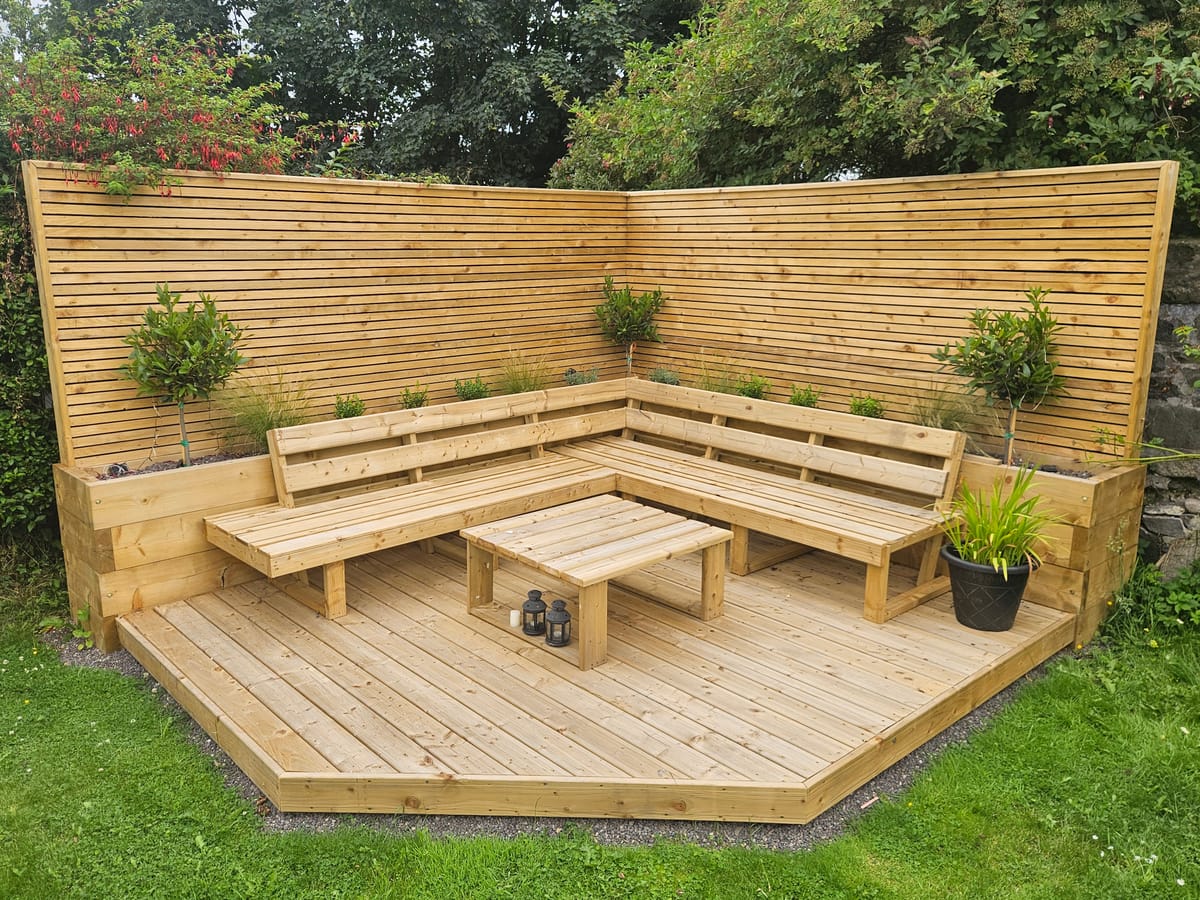
It is the question that stops a lot of people before they ever pick up the phone. We are in one of the wettest corners of Europe, everyone knows someone whose deck went soft and grey, so does timber decking actually rot in the Irish climate? Here is the honest answer, and we are not going to dress it up: yes, timber can rot. It is a natural material sitting out in Louth rain. But here is the part that matters, and the part most people never hear. Almost every rotted deck we are called out to did not fail because of the weather. It failed because of how it was built. Rot, nine times out of ten, is a build fault, not an act of God.
If you want the full picture on the material first, our timber decking page lays out where it suits a garden and where it does not. This piece is about the rot fear specifically, and how to tell a deck that will last from one that is quietly turning to compost.
What Actually Makes Timber Rot
Rot is not the rain itself. Rot is fungal decay, and the fungus that causes it needs one thing above everything else: timber that stays wet. Keep wood dry, or let it dry out between soakings, and the fungus has nothing to live on. Trap the damp in and you have built it a home.
That is why our climate gets the blame it does not fully deserve. Met Eireann logs well over a hundred wet days a year across most of the country, and in 2025 the national average rainfall came in at 1,338.7mm, the 15th wettest year since 1941. There is no arguing with that. Our timber is going to get wet, often. The job of a good deck is not to keep the rain off. It is to make sure the timber dries out again every time, so the fungus never gets the steady damp it needs.
A deck rots when four things go wrong, usually together:
- Trapped damp with nowhere to drain. Water sits on a flat surface or pools under the frame and never leaves.
- No ventilation underneath. A subframe sealed tight to the ground cannot breathe, so it stays wet long after the rain stops.
- Bare cut ends. Every time a board or joist is sawn, the cut exposes raw, untreated wood that drinks moisture straight in.
- Under-spec or wrongly rated timber. Wood treated only for above-ground, dry use, put into damp ground contact where it was never meant to go.
Get all four wrong and the deck was finished the day it was built. It just took a couple of winters to show.
Why Most Irish Decking Rot Is a Build Fault
Spend a few minutes reading the complaints on Irish gardening forums and you will see the same story over and over: the deck rotted, it went soft, it was a waste of money. The frustration is real. But look at how those decks were put together and the cause is almost never the climate on its own.
The biggest one we see is the wrong timber in the wrong place. Not all treated timber is equal. A lot of decks are framed with timber rated only for above-ground use, then sat straight onto or into damp soil. As one Irish decking supplier puts it plainly, those timbers might be fine in a dry climate, but not here, and in a shaded or poorly drained garden decay can start in just a couple of years, beginning at the joints and contact points where moisture gets trapped. For ground contact you want ground-rated posts, properly pressure-treated for the job, not whatever was cheapest on the rack.
Then there is the cut-ends problem. Treatment is forced into the timber at the factory, but the moment a joist is cut to length on site, the saw exposes raw wood in the middle that the treatment never reached. Leave that bare and it soaks water up from the end like a straw, and the rot starts on the inside where you will never see it until the board gives way. Sealing every cut end as it is made is a small job that the cheap installer skips and the good one never does.
And the deck that has no fall and no air gap is doomed from the start. A chartered building surveyor with the Society of Chartered Surveyors Ireland, writing in the Irish Times, recommends that any new decking be laid on a slight slope to one side, so rainwater runs off along the grooves instead of standing on the boards, which is what causes deterioration. The same surveyor reckons timber decking that is properly treated every two to three years should last around 15 years. Standing water is the enemy. A flat, sealed-in deck holds it; a built-right deck sheds it.
How a Proper Deck Holds the Rot Off
We will be straight with you, because the rot fear deserves a straight answer and not a sales line. We cannot make timber that is immune to rot, and we would not trust anyone who told you they could. What we can do is build a deck so that the damp never gets the chance to do its work, and that is the difference between a deck that is still solid in fifteen years and one that is soft in three.
Here is what that build looks like:
- Ground-rated posts. Where timber meets the ground, we use posts treated to take that contact, set so they are not sitting in a puddle of their own.
- A ventilated, free-draining subframe. An air gap underneath so the whole frame breathes and dries out between downpours, with the ground below kept free-draining rather than holding water against the timber.
- A slight fall for run-off. The boards laid with a gentle slope so rain runs off along the grooves and off the deck, exactly as that surveyor advises, instead of pooling on the surface.
- Every cut end sealed. As each joist and board is cut, the fresh end gets sealed there and then, so there is no bare wood drinking moisture in where you cannot see it.
That is a deck built to last in the Louth weather, in Dundalk, out in Blackrock, up in Carlingford and the Cooley peninsula where the damp and the sea air are no joke. None of it is fancy. It is just the boring, careful stuff that decides whether a deck survives. The fancy boards on top get all the attention; the frame underneath does all the work.
Is Your Existing Deck Already Going?
If you already have a timber deck and this has you worried, do not panic, do a quick test. Take a screwdriver and press the tip firmly into the timber, especially at the joints, around the posts, and anywhere it meets the house wall or the ground. Sound timber resists. If the screwdriver sinks into soft, spongy, crumbly wood, that section has rot in it. A bouncy or springy feel underfoot, posts you can rock, dark soft patches and a musty smell are all telling you the same thing.
The good news is that rot is often local rather than total. A frame that was built right but is showing its age may only need the worn sections replaced, not the whole deck ripped out. We go through the options honestly in our guide to decking repairs, and we will always tell you when a repair makes sense and when you are throwing good money after bad. Either way, catching it early is cheaper than catching it late.
We are a Dundalk father-and-son team building and repairing decks across County Louth, and we have torn out enough rotted frames to know exactly what makes one fail and what makes one last. If you want a deck built to hold off the damp, or you are worried the one you have is going, call Seamus on 085 168 5170 or message us on WhatsApp and he will give you a straight answer.