
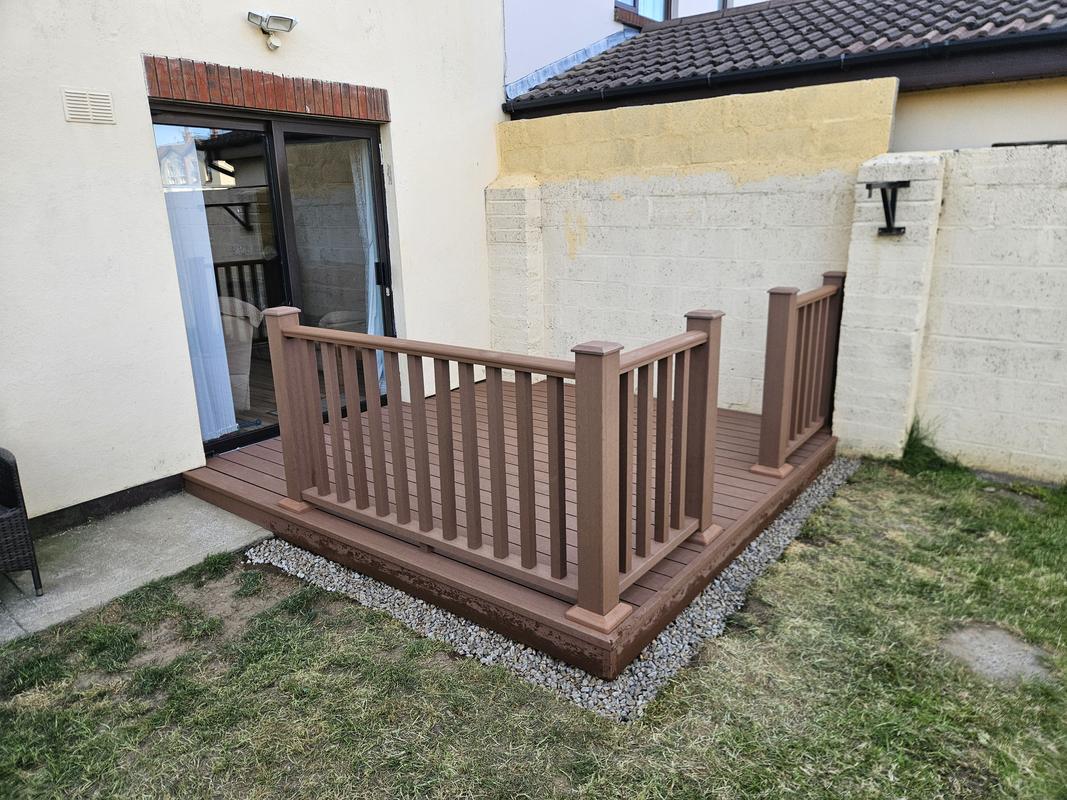
A sloped, uneven or awkward garden is the one most families never use. Raised and multi-level decking turns that bank, dip or hillside into flat, usable outdoor living space, built on a proper engineered subframe so it stays solid, level and safe for years.
We design and build raised decking across Dundalk and County Louth, from a single raised platform off the back door to a full multi-level deck that steps down a sloping garden.
Call Seamus on 085 168 5170 for a free quote or message us on WhatsApp.
The Garden You Think You Can’t Use
Plenty of gardens around Louth are not flat. Some slope gently away from the house. Others drop sharply, especially out around the Cooley peninsula and the hillier gardens near Carlingford, where the ground can fall a metre or more from the back door to the end of the lawn. A lot of these gardens get written off as too steep, too lumpy or too wet to do anything with.
That is exactly where a raised deck earns its keep. Instead of digging out the slope, building retaining walls and importing tonnes of fill the way a patio would need, a raised deck sits on a frame above the existing ground. The legs do the levelling. You end up with a flat, dry, usable platform sitting over a garden that was doing nothing before.
Done well, a slope stops being a problem and becomes the best feature you have: a deck that looks out over the garden rather than sitting in the middle of it.
On a Slope, the Build Is Everything
This is where most regret stories start. A raised deck is only as good as what is holding it up, and on sloping or soft ground there is a lot more holding it up than on the flat. Get the structure wrong and you get bounce, sag, movement underfoot and, eventually, a deck that is genuinely unsafe. Get it right and it feels as solid as a floor inside the house.
Here is what a raised deck actually needs, the parts you never see once the boards go down:
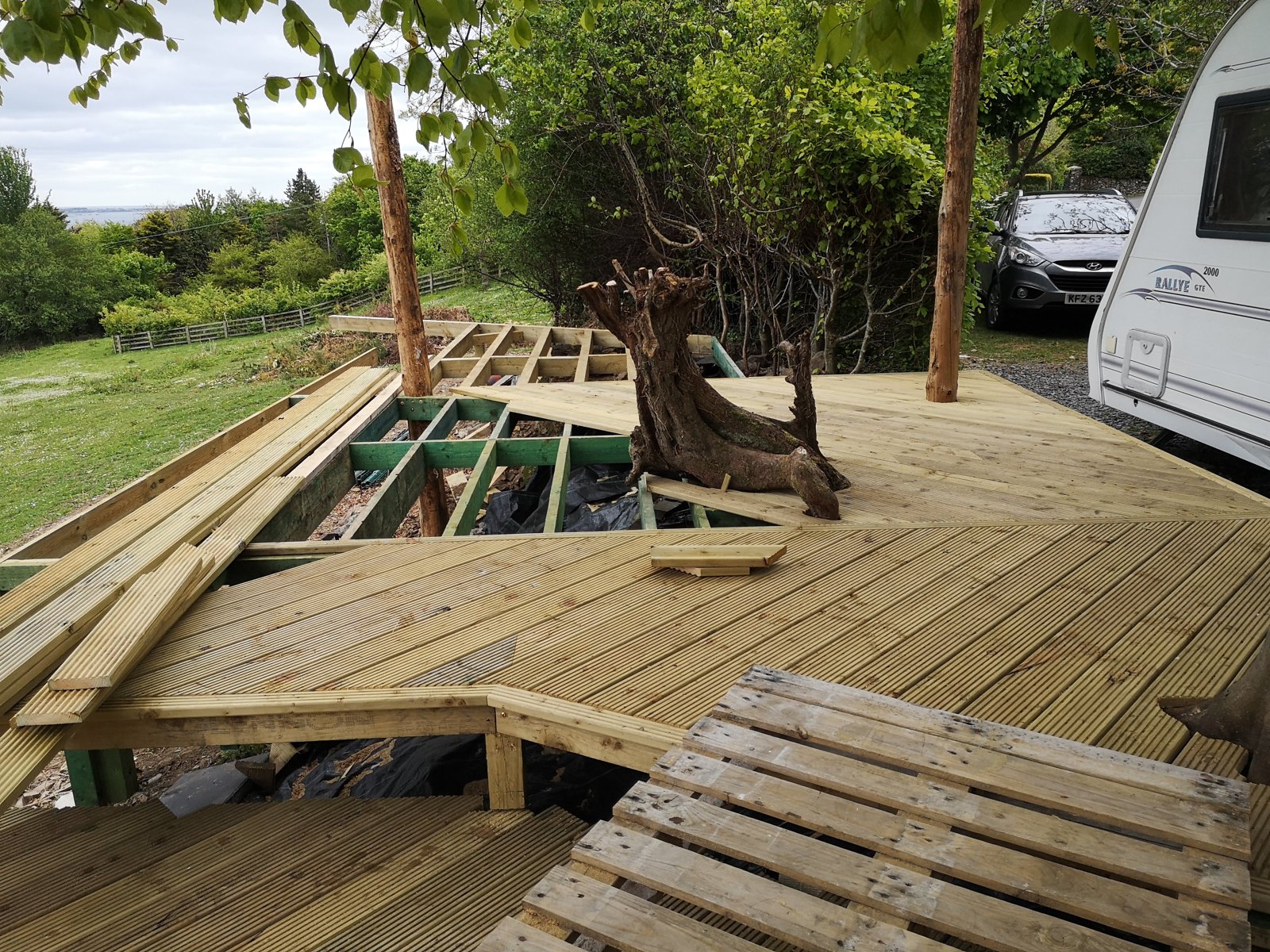
- Proper foundations. Posts set on concrete footings or postcrete, dug to a depth that suits the ground, so the legs cannot sink or shift. On a slope each post is a different height, all working back to one level frame.
- Correctly graded, treated posts. Pressure-treated structural timber sized for the load and the height. The taller the deck, the more the posts have to carry, and the more it matters that they are the right grade and properly preserved against rot.
- Bracing. Once a deck stands up off the ground it needs cross-bracing between the posts to stop it swaying. This is the step cheap jobs skip, and it is the reason some raised decks feel bouncy or move when you walk on them.
- Drainage and ground prep. Water has to run off the boards and away from the posts, not pool around the legs. On damp or uneven and boggy ground we prep the site and set the footings so the structure stays dry where it counts.
If you want the full picture of how a deck is engineered on a slope, we have written it up in plain English. The short version: this is structural work, not a quick lay-and-go job, and it is worth having someone build it who treats it that way.
How We Build It
- You call. Seamus comes out, looks at the fall of the garden and the ground conditions, and talks through what will work for your space and your budget.
- You get an itemised quote. A written price listing the foundations, the frame, the boards, the steps, the balustrades and the cleanup, with old-deck removal included if there is one to take out.
- We build it to last. Footings set, posts levelled and braced, a drained and ventilated subframe, then the deck surface laid and finished cleanly, with steps and railings where the height needs them.
- We leave it tidy. Spoil and offcuts taken away, the old structure removed, the site left neat.
What You Get
A flat, safe, good-looking deck that makes a difficult garden genuinely usable, designed around how you want to live in it.
- A solid, braced, engineered subframe that does not bounce, sag or shift
- Multiple levels where the garden suits it, a dining deck up top, a sheltered seating or fire-pit zone a step down
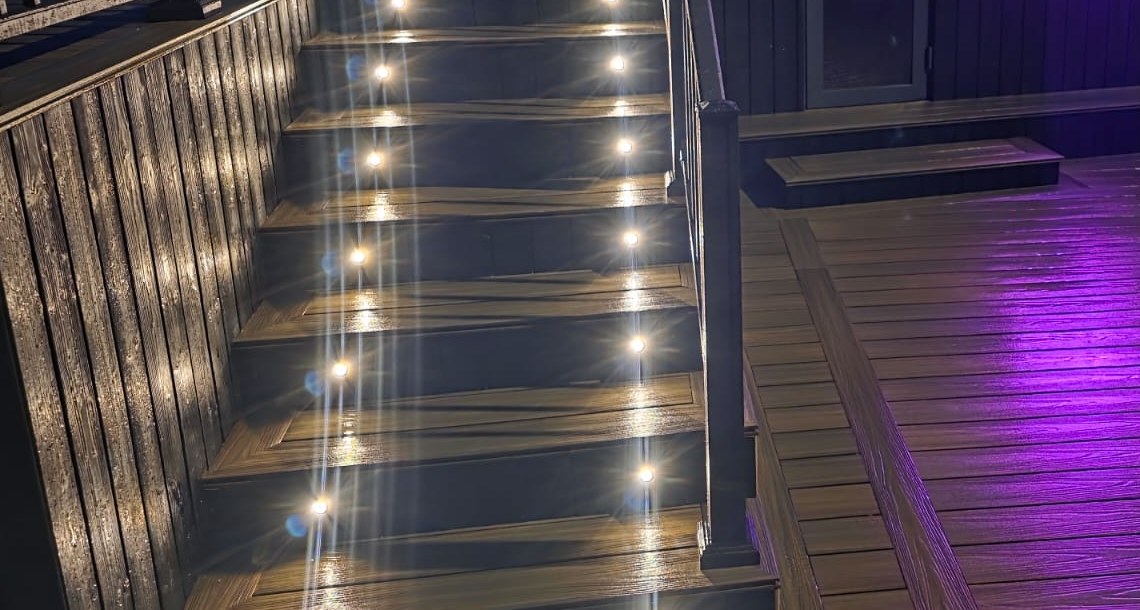
- Wide steps between levels that double as informal seating when you have people over
- Balustrades and handrails built to keep a raised deck safe for children and older family members
- Anti-slip composite boards for raised decks or properly finished timber, your choice of surface
- Built-in seating, planters and recessed lighting worked into the one job if you want them
For a few design directions that suit steeper sites, see our multi-level decking ideas for sloped gardens. If you are weighing it up against a flat deck, raised versus ground-level decking walks through which suits which garden.
Do You Need Planning Permission for a Raised Deck?
This is the question that catches people out, and it matters more on a raised deck than a ground-level one. So here is the honest answer rather than a vague one.
A domestic deck is generally treated as a garden alteration, and that kind of work is usually exempt from planning permission once it sits no more than one metre above ground level. Go above that, or build something that overlooks a neighbour’s garden in a way that affects their privacy, and permission may be needed. Conservation areas and protected structures are tighter again. Worth knowing: decking is not actually named in the regulations, so it is treated case by case, which is why anything tall or close to a boundary should be checked with the council rather than assumed. Citizens Information sets out the exempted development rules for altering a house and garden if you want to read them.
What that means in practice: most back-garden raised decks we build are well within the exemption and need nothing. The ones to think harder about are tall decks close to a boundary, or anything that would look straight into next door’s garden. We will tell you straight where your job sits, and if it is borderline we will point you to Louth County Council to confirm before a board is cut. Nobody wants to build a deck twice.
What It Costs
A raised deck costs more than a flat one, and it should. The extra goes into longer posts, more framing, bracing, foundations, and usually steps and balustrades on top. The steeper and higher the garden, the more structure it takes to make it level and safe, so the price climbs with the slope.
We do not quote a flat figure online because no two sloping gardens are the same. You get a fixed, written, itemised price after we have seen the job, with the structural work, the steps and the railings all listed so there are no surprises at the end. For typical ranges and what moves the number, see what raised decking costs in Ireland and our wider decking cost guide for County Louth.
Raised and Multi-Level Decking FAQ
Can you build decking on a sloped garden?
Yes, and it is one of the best uses of decking there is. Rather than excavating the slope, we build a raised frame on posts set to different heights that all work back to one level platform. Gentle slopes, steep falls and uneven ground can all be decked. Very wet or waterlogged ground needs proper foundations and drainage first, and we will tell you honestly if a site is not suitable.
Do I need planning permission for a raised deck in Ireland?
Usually not. Decking is generally treated as a garden alteration, which is exempt once it sits no more than one metre above ground level. You may need permission if it goes higher than that, overlooks a neighbour’s garden in a way that affects privacy, or sits in a conservation area or beside a protected structure. Because decking is not named directly in the regulations, anything tall or near a boundary is worth confirming with Louth County Council, and we will tell you where your deck falls.
Can you put decking on uneven or boggy ground?
Often, yes, where a patio would struggle. Because a raised deck sits on posts rather than on the ground, it can span dips, lumps and damp ground that would need major levelling for paving. Soft or boggy ground needs the footings taken down to something solid and proper drainage built in, which we sort as part of the build. If it genuinely will not hold a deck, we will say so.
Is a raised deck safe for children and older family?
A properly built raised deck is very safe. The structure is braced so it does not move, and any deck above the regulation height gets balustrades and handrails. Wide, well-lit steps between levels and an anti-slip board surface keep it safe to use in the wet, which is most of the Irish year.
What is the difference between raised and multi-level decking?
A raised deck is a single platform lifted off the ground on a frame, used to create one flat area on a slope. Multi-level decking uses two or more connected platforms at different heights, linked by steps, to follow a falling garden and zone it into separate areas, somewhere to dine, somewhere to relax. Multi-level suits bigger or steeper gardens.
Get a Free Raised Decking Quote
If you have a sloped, uneven or awkward garden you have written off, it is very likely we can turn it into proper outdoor living space. Built right, finished neat, quoted honestly, with no surprises at the end.
Call Seamus on 085 168 5170 for a free, itemised quote, message us on WhatsApp, or book a free site visit and he will call out, take a look at the fall of the garden, and get a written quote back to you. We cover Dundalk and all of County Louth.