
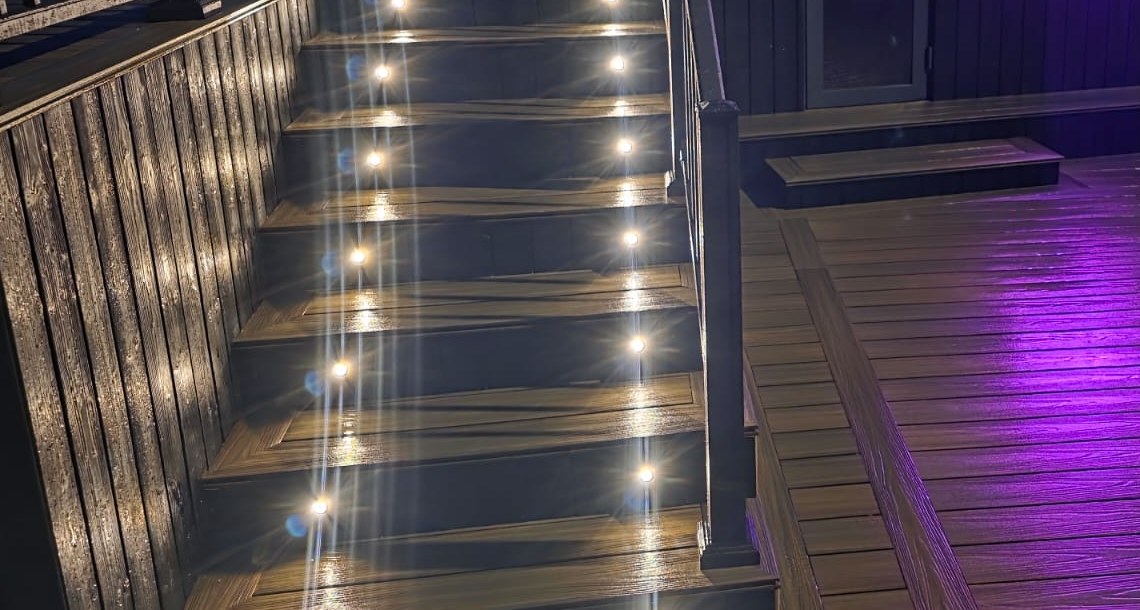
Before anyone in Louth spends a few thousand euro on a deck, there is a fork in the road they often do not know they are standing at: do you build it down on the ground, or up on a frame? It sounds like a small detail. It is not. It changes the cost, the look, the steps, the railings, even whether the deck lasts. And the right answer depends almost entirely on one thing most people overlook until we are standing in the garden with them - how flat, or how not-flat, that garden actually is. Here is the honest comparison, the way we explain it on a site visit.
The short version: a raised deck on a frame is built for sloped, uneven or awkward gardens, or where you want the deck level with the back door. A ground-level deck is the simpler, cheaper option for a flat garden with good drainage. Most of the decision comes down to your ground.
What the Two Actually Are
A ground-level deck sits low, just clear of the ground, on a shallow frame. From the lawn you step up onto it without really climbing. Because it is low, it usually needs no balustrades and no steps, which is a big part of why it is cheaper. It is the classic “deck off the patio doors on a flat garden” job.
A raised deck is lifted off the ground on posts and a deeper subframe. The posts can be set to different heights, so the deck stays dead level even where the ground underneath falls away. That is what makes it the answer for a slope. Once a deck goes above about a metre it needs railings, and most raised decks need at least a step or two as well.
Plenty of Louth gardens push you toward one or the other before you have even decided. A flat back garden in an estate around Dundalk or Castlebellingham suits a ground-level deck. A garden that falls away out toward Cooley or up the hill behind Carlingford is a raised job, full stop. We cover the engineering side of that in detail in our guide to building decking on a slope.
Cost: Ground-Level Wins, And It Should
There is no getting around it - a ground-level deck is the cheaper build, and on the right garden it is the smarter spend.
The reason is just material and labour. A ground-level deck has a shallow frame, very few posts, no balustrade, and usually no steps. A raised deck has to carry longer structural posts, deeper foundations, cross-bracing to stop it swaying, and then steps and railings on top. UK trade cost guides such as Checkatrade’s decking breakdown consistently put raised and multi-level decks at the top of the price range for exactly these reasons: more structure, more groundwork, more labour.
So the steeper and higher the garden, the wider the gap between the two prices gets. On a flat lawn, paying raised-deck money for a raised deck you do not need is just money out the door. We will tell you that straight. For the full picture on what drives the number, see what raised decking costs in Ireland.
Slope, Access and Look: Where Raised Earns Its Keep
Cost is only half the story. There are gardens where a ground-level deck simply cannot do the job.
- Slope. This is the big one. On a real fall, a ground-level deck would need the garden dug out, levelled and often retained, which is heavy, expensive groundwork. A raised deck just bridges the slope on its posts. The legs do the levelling.
- Level with the back door. If you want to walk straight out of the kitchen onto the deck with no step down, and the garden sits lower than the house, you need a raised frame to bring the surface up to the threshold. A low deck cannot reach it.
- Access and the view. A raised deck looks out over the garden rather than sitting down in it, and it gives you usable storage underneath, closed in with skirting for tools, bikes or cushions. A ground-level deck sits low and quiet, blends into a flat garden, and feels like an extension of the lawn.
Neither look is better. A low deck on a flat garden looks right. A raised deck on a slope looks right. Forcing the wrong one onto the wrong garden is where decks end up looking awkward.
Drainage and Ventilation: The Part That Decides If It Lasts
This is the bit that catches people out, and it matters more on a ground-level deck.
Timber rots when it stays wet and cannot dry. In a climate like ours, where Met Éireann records rain on the majority of days across the east coast, the ground under a deck barely gets a chance to dry out. A raised deck has plenty of air moving underneath it, so it sheds that damp naturally. A ground-level deck sits right down in it, so the build has to do the work the height would otherwise do for free.
What a ground-level deck needs to last:
- An air gap underneath. UK decking guides recommend a clearance of around 150mm under the frame for ventilation, because the ground beneath a deck never dries properly if airflow is blocked. Sit a frame straight on the soil and you have built a damp trap.
- A fall for run-off. The surface is laid with a slight slope, roughly a 1:100 fall (10mm per metre), so rain runs off the boards instead of pooling on them.
- Ground prep and drainage. Vegetation stripped out, a membrane and gravel laid to keep moisture moving away, and treated, ground-rated timber with sealed cut ends in the frame.
That same source notes a large share of rot and warping cases trace back to poor drainage and ventilation under the deck rather than the climate itself. In other words, a ground-level deck is not doomed to rot - a badly ventilated one is. Built with the air gap, the fall and the right treated timber, a low deck lasts a long time. We will not promise you any deck can never rot, nobody honest can, but we will build the ventilated, free-draining frame that gives timber its best chance, and tell you straight if your flat garden is too wet to sit a low deck on at all. On boggy ground, that is often the moment we recommend raising it instead.
So Which One Suits Your Garden?
Stand in your garden and look at the ground. That tells you most of it.
- Flat or gently sloping, decent drainage, happy with a deck that sits low: a ground-level deck. Cheaper, simpler, no railings, looks natural on a flat lawn.
- Sloped, uneven, boggy, or you want it level with the back door: a raised deck. It costs more, but it is the only one that makes that garden genuinely usable, and the storage and the view are a real bonus.
If you are genuinely on the fence, the slope decides it more often than not, and a free site visit settles it in ten minutes.
We are a Dundalk father-and-son team building both kinds of deck across County Louth, in Blackrock, Carlingford, Ardee and beyond, and we will tell you honestly which one your garden actually needs before you spend a cent. Call Seamus on 085 168 5170 or message us on WhatsApp and he will call out, look at the fall of the ground, and quote you straight.