
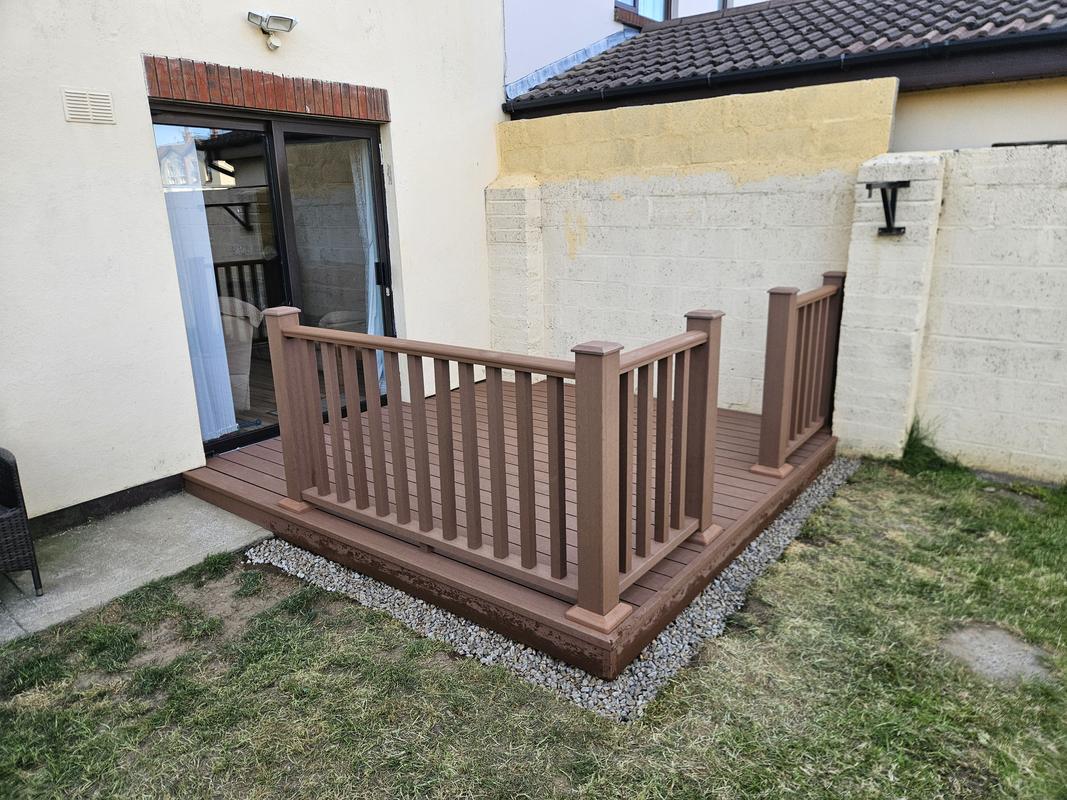
People often call it “plastic decking” and leave it at that, but that is only half right, and the half that is wrong is the part that makes it last. So here is a plain answer, no sales gloss, to what composite decking is actually made from, how it differs from timber, and why its make-up holds up so well in a damp Irish garden. We fit it across County Louth every week, so this is the version we would give you over a cup of tea, not the brochure version.
The Recipe: Wood Fibre and Plastic
At its core, composite decking is a mix of two things: wood and plastic. Fine wood fibre, usually sawdust left over from timber processing, is blended with a thermoplastic, most often a recycled polyethylene like the kind used for milk jugs and detergent bottles. A small amount of additives goes in too: colourants, UV stabilisers and anti-mould agents.
The proportions vary by brand, but wood typically makes up somewhere between 30 and 65 percent of the finished board by weight, with the plastic making up most of the rest. The mix is heated into a dough-like material and then moulded or extruded into board shapes. The clever part is what the plastic does: it binds the wood fibres together and seals them in, which is what gives the board its strength and its resistance to moisture. Real wood drinks in water; composite largely shrugs it off.
Where the Recycled Content Comes In
This is one of composite’s quiet selling points. A lot of the plastic is recycled, from bottles, bags and packaging, and the wood fibre is usually reclaimed sawdust that would otherwise be waste. So a composite deck puts to use materials that would have gone to landfill, and because it lasts so long, it reduces the demand to keep felling timber for replacement decks.
We will not oversell it as zero-impact, because nothing is. But for a homeowner who wants a deck that lasts decades and makes use of recycled material rather than fresh hardwood, it is a genuinely sensible choice on that front.
WPC, PVC and the Word “Composite”
A bit of plain jargon-busting, because the terms get muddled. “Composite” is the umbrella word. The most common type is WPC, wood-plastic composite, which is the wood-and-plastic mix described above. PVC decking is sometimes lumped in with composite, but it is all plastic with no wood in it at all, which makes it very water-resistant but less wood-like underfoot. There are also mineral-based boards that swap the wood for mineral fillers.
For most gardens, a quality WPC board is the sweet spot of natural look, feel and price. Separate from all of that is whether the board is capped or not, which is a different decision worth understanding on its own; our guide on whether the board is capped or uncapped explains why that matters more than the colour.
Hollow vs Solid Boards
One more thing you will come across. Composite boards come hollow or solid. Hollow boards are lighter, cheaper and easier to handle, but they are less sturdy and usually need end caps to finish them off neatly. Solid boards are heavier and stronger, feel more like real timber underfoot, and stand up better to weather and traffic. For most of the decks we build in Irish gardens, a solid board is the safer long-term bet, though there are good hollow boards for the right job.
Why the Make-Up Suits a Damp Irish Garden
Here is where the recipe earns its place in our climate. The very thing that makes timber fail here, its thirst for water, is the thing composite mostly avoids. Because the wood fibres are bound up in plastic, the board does not soak up moisture the way a timber plank does, so it shrugs off the rot-and-grey cycle that ends so many timber decks early. It also resists insects, which the plastic content helps with.
That is exactly why composite has taken off in damp, shaded gardens around Dundalk, Blackrock and Carlingford, where timber struggles to stay dry, and it is the make-up we rely on for composite deck installation in Dundalk and across the county. If you want to see how the two genuinely compare for an Irish garden, our honest look at how composite stacks up against real wood lays it out side by side.
If you want to know exactly what is going into your deck, we will tell you straight, the board, the make-up and why we would choose it for your garden. No jargon, no upsell. Get a free, no-surprises quote, call Seamus on 085 168 5170, or message us on WhatsApp.